The crypto market entered a tense phase after the Federal Reserve delivered a 25-basis-point rate cut and signaled limited easing […] The post BTC Holds $92K, BCHThe crypto market entered a tense phase after the Federal Reserve delivered a 25-basis-point rate cut and signaled limited easing […] The post BTC Holds $92K, BCH

BTC Holds $92K, BCH Forms Bullish Base, But This $0.0035 Token Emerges as the Best Altcoin to Invest in – Know Why

2025/12/12 22:15

The crypto market entered a tense phase after the Federal Reserve delivered a 25-basis-point rate cut and signaled limited easing for 2026. Markets adjusted their expectations and priced a slower path for next year.

Consequently, risk sentiment weakened across major best altcoins to buy now. Bitcoin slipped under $90,000 during the initial reaction as traders weighed the policy shift, earnings news, and reduced liquidity conditions.

Oracle’s weaker results added more pressure and created fresh uncertainty across high-beta assets. Besides, traders focused on the wider implications for early-stage projects. Many investors sought the best altcoins with clearer adoption paths and stronger internal demand mechanisms. Hence, attention shifted toward Tapzi, BCH, and Bitcoin, as each asset exhibited distinct market structures and potential turning points.

Tapzi Introduces a Skill-Based Model for Web3 Adoption

Tapzi entered the market with a different structure that aims to reduce inflation, improve user onboarding, and support sustained activity. The project launched on BNB Smart Chain and positioned itself as a decentralized Skill-to-Earn arcade ecosystem. It targets real players instead of speculative bots and encourages organic engagement across multiple games.

The platform offers Chess, Checkers, Rock-Paper-Scissors, and other casual formats, which appeal to mainstream mobile users. Players stake TAPZI tokens to enter matches. Winners take the prize pool, which ensures clear incentives and a transparent flow of funds. Additionally, the design removes random rewards and avoids artificial inflation since the economy relies on player stakes.

Tapzi uses a fixed supply of 5 billion tokens. The team allocated 20% for the presale, 20% for liquidity, and 15% for the treasury. The vesting structure unlocks 25% of presale tokens at TGE, with the remainder released across three months. Furthermore, the early price set the token at $0.0035 during the presale, while the listed launch price stands at $0.01.

Consequently, the project built a clear narrative around sustainability. Developers can publish games through Tapzi’s launchpad and use its SDK tools. Moreover, players can start in Free Mode without holding tokens, which improves onboarding for new users.

Tapzi targets markets with strong investor interest and massive mobile gaming populations. This positioning supports long-term demand and offers investors a fresh entry in a rapidly growing Web3 gaming market.

Tapzi’s Advantage in a Crowded Market: Best Altcoin to Buy

The global gaming industry expects to exceed $400 billion by 2028. Web3 gaming forms a smaller segment today, yet analysts expect growth toward $124.7 billion by 2032. Hence, investors monitor early platforms with strong internal mechanics, clear user funnels, and fair reward structures.

Tapzi’s system aligns with this shift. It removes gas fees, supports web and mobile users, and avoids complex onboarding steps. Significantly, this design attracts mainstream gamers without previous blockchain experience. The project also targets skill-based competition, which encourages consistent activity and more predictable engagement patterns.

TAPZI built a market narrative around self-sustaining flow. More players increase token demand, expand prize pools, and lift platform activity. Consequently, investors observe the progress of its best crypto presale of the year as adoption begins to form a measurable base.

Bitcoin Struggles Near Resistance as Traders Track Key Levels

Bitcoin remained locked between $92,000 and $93,000. However, the price failed to secure momentum above this zone. Tedpillows, an analyst, emphasized this stalled attempt and highlighted rising attention on lower support. The cryptocurrency traded near $92,274 during the session. Market data showed a 2.38% daily and a 1.8% weekly surge. With a market cap of nearly $1.84 trillion, Bitcoin stayed within a wide consolidation range.

Tedpillows monitored the $88,000 to $89,000 zone as a crucial support region. The price may attempt a retest soon as volatility increases. If Bitcoin holds this area, buyers may attempt another push toward resistance. However, a breakdown exposes the $85,000 region and could set a deeper decline.

Source

Moreover, the macro outlook remains sensitive. Traders monitor Fed commentary, earnings, and liquidity signals. Any shift may influence near-term direction and determine whether Bitcoin can recover from its muted momentum.

BCH Attempts to Build a Base Above Support

Bitcoin Cash also traded lower, yet the structure on its chart suggested a constructive pattern. BCH fell 1.86% over the past 24 hours and 3.27% this week. The asset held near $582 and carried a market cap slightly above $11.1 billion.

TurboBullCapital, an analyst, noted a developing base above the $558 support region. Buyers defended this zone during recent sessions. The market rejected $608 earlier, which remains a critical barrier for upside continuation.

Source

Additionally, the price formed periods of tight consolidation around meaningful levels. This behavior often signals preparation for a larger directional move. A daily close above $608 may unlock a path toward the $650 region, which has not been tested in recent swings.

Hence, traders watch the next sessions closely as BCH attempts to reclaim momentum.

Besides, the asset benefits from a broader interest in faster settlement chains and alternative payment systems. Any improvement in market sentiment may strengthen its attempt to rebuild the short-term structure.

Conclusion: Best Altcoin to Invest in

Markets entered a sensitive phase after the Fed’s cautious outlook for 2026. Bitcoin held near $90,000 and tested support as traders watched volatility. BCH attempted to stabilize above its key level while preparing for another test of resistance.

However, Tapzi, the best altcoin to invest in, drew attention for its clear utility, transparent game economy, and structured token model. The platform offers a sustainable Skill-to-Earn ecosystem and a launchpad for developers. Moreover, its early price offers entry for investors seeking exposure to Web3 gaming growth. Consequently, many observers see Tapzi, Bitcoin, and BCH forming different opportunities in a shifting market landscape.

Join Tapzi’s $500,000 community giveaway and compete across nine prize categories to earn $TAPZI tokens—sign up today and become an early adopter!

Media Links: 

Website: https://www.tapzi.io/

Whitepaper: https://docs.tapzi.io/

X Handle: https://x.com/Official_Tapzi


This publication is sponsored and written by a third party. Coindoo does not endorse or assume responsibility for the content, accuracy, quality, advertising, products, or any other materials on this page. Readers are encouraged to conduct their own research before engaging in any cryptocurrency-related actions. Coindoo will not be liable, directly or indirectly, for any damages or losses resulting from the use of or reliance on any content, goods, or services mentioned.

The post BTC Holds $92K, BCH Forms Bullish Base, But This $0.0035 Token Emerges as the Best Altcoin to Invest in – Know Why appeared first on Coindoo.

Sorumluluk Reddi: Bu sitede yeniden yayınlanan makaleler, halka açık platformlardan alınmıştır ve yalnızca bilgilendirme amaçlıdır. MEXC'nin görüşlerini yansıtmayabilir. Tüm hakları telif sahiplerine aittir. Herhangi bir içeriğin üçüncü taraf haklarını ihlal ettiğini düşünüyorsanız, kaldırılması için lütfen service@support.mexc.com ile iletişime geçin. MEXC, içeriğin doğruluğu, eksiksizliği veya güncelliği konusunda hiçbir garanti vermez ve sağlanan bilgilere dayalı olarak alınan herhangi bir eylemden sorumlu değildir. İçerik, finansal, yasal veya diğer profesyonel tavsiye niteliğinde değildir ve MEXC tarafından bir tavsiye veya onay olarak değerlendirilmemelidir.

Ayrıca Şunları da Beğenebilirsiniz

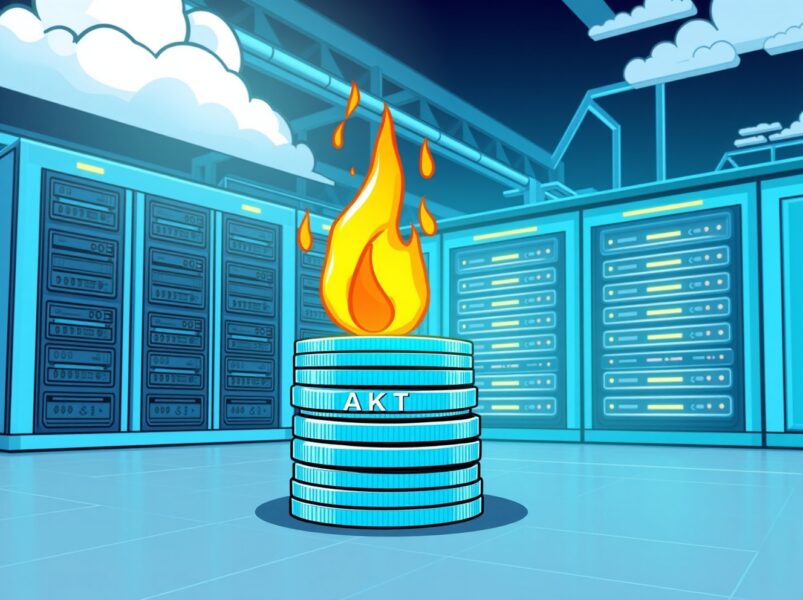
Akash Network’s Strategic Move: A Crucial Burn for AKT’s Future

Akash Network’s Strategic Move: A Crucial Burn for AKT’s Future

BitcoinWorld Akash Network’s Strategic Move: A Crucial Burn for AKT’s Future In the dynamic world of decentralized computing, exciting developments are constantly shaping the future. Today, all eyes are on Akash Network, the innovative supercloud project, as it proposes a significant change to its tokenomics. This move aims to strengthen the value of its native token, AKT, and further solidify its position in the competitive blockchain space. The community is buzzing about a newly submitted governance proposal that could introduce a game-changing Burn Mint Equilibrium (BME) model. What is the Burn Mint Equilibrium (BME) for Akash Network? The core of this proposal revolves around a concept called Burn Mint Equilibrium, or BME. Essentially, this model is designed to create a balance in the token’s circulating supply by systematically removing a portion of tokens from existence. For Akash Network, this means burning an amount of AKT that is equivalent to the U.S. dollar value of fees paid by network users. Fee Conversion: When users pay for cloud services on the Akash Network, these fees are typically collected in various cryptocurrencies or stablecoins. AKT Equivalence: The proposal suggests converting the U.S. dollar value of these collected fees into an equivalent amount of AKT. Token Burn: This calculated amount of AKT would then be permanently removed from circulation, or ‘burned’. This mechanism creates a direct link between network utility and token supply reduction. As more users utilize the decentralized supercloud, more AKT will be burned, potentially impacting the token’s scarcity and value. Why is This Proposal Crucial for AKT Holders? For anyone holding AKT, or considering investing in the Akash Network ecosystem, this proposal carries significant weight. Token burning mechanisms are often viewed as a positive development because they can lead to increased scarcity. When supply decreases while demand remains constant or grows, the price per unit tends to increase. Here are some key benefits: Increased Scarcity: Burning tokens reduces the total circulating supply of AKT. This makes each remaining token potentially more valuable over time. Demand-Supply Dynamics: The BME model directly ties the burning of AKT to network usage. Higher adoption of the Akash Network supercloud translates into more fees, and thus more AKT burned. Long-Term Value Proposition: By creating a deflationary pressure, the proposal aims to enhance AKT’s long-term value, making it a more attractive asset for investors and long-term holders. This strategic move demonstrates a commitment from the Akash Network community to optimize its tokenomics for sustainable growth and value appreciation. How Does BME Impact the Decentralized Supercloud Mission? Beyond token value, the BME proposal aligns perfectly with the broader mission of the Akash Network. As a decentralized supercloud, Akash provides a marketplace for cloud computing resources, allowing users to deploy applications faster, more efficiently, and at a lower cost than traditional providers. The BME model reinforces this utility. Consider these impacts: Network Health: A stronger AKT token can incentivize more validators and providers to secure and contribute resources to the network, improving its overall health and resilience. Ecosystem Growth: Enhanced token value can attract more developers and projects to build on the Akash Network, fostering a vibrant and diverse ecosystem. User Incentive: While users pay fees, the potential appreciation of AKT could indirectly benefit those who hold the token, creating a circular economy within the supercloud. This proposal is not just about burning tokens; it’s about building a more robust, self-sustaining, and economically sound decentralized cloud infrastructure for the future. What Are the Next Steps for the Akash Network Community? As a governance proposal, the BME model will now undergo a period of community discussion and voting. This is a crucial phase where AKT holders and network participants can voice their opinions, debate the merits, and ultimately decide on the future direction of the project. Transparency and community engagement are hallmarks of decentralized projects like Akash Network. Challenges and Considerations: Implementation Complexity: Ensuring the burning mechanism is technically sound and transparent will be vital. Community Consensus: Achieving broad agreement within the diverse Akash Network community is key for successful adoption. The outcome of this vote will significantly shape the tokenomics and economic model of the Akash Network, influencing its trajectory in the rapidly evolving decentralized cloud landscape. The proposal to introduce a Burn Mint Equilibrium model represents a bold and strategic step for Akash Network. By directly linking network usage to token scarcity, the project aims to create a more resilient and valuable AKT token, ultimately strengthening its position as a leading decentralized supercloud provider. This move underscores the project’s commitment to innovative tokenomics and sustainable growth, promising an exciting future for both users and investors in the Akash Network ecosystem. It’s a clear signal that Akash is actively working to enhance its value proposition and maintain its competitive edge in the decentralized future. Frequently Asked Questions (FAQs) 1. What is the main goal of the Burn Mint Equilibrium (BME) proposal for Akash Network? The primary goal is to adjust the circulating supply of AKT tokens by burning a portion of network fees, thereby creating deflationary pressure and potentially enhancing the token’s long-term value and scarcity. 2. How will the amount of AKT to be burned be determined? The proposal suggests burning an amount of AKT equivalent to the U.S. dollar value of fees paid by users on the Akash Network for cloud services. 3. What are the potential benefits for AKT token holders? Token holders could benefit from increased scarcity of AKT, which may lead to higher demand and appreciation in value over time, especially as network usage grows. 4. How does this proposal relate to the overall mission of Akash Network? The BME model reinforces the Akash Network‘s mission by creating a stronger, more economically robust ecosystem. A healthier token incentivizes network participants, fostering growth and stability for the decentralized supercloud. 5. What is the next step for this governance proposal? The proposal will undergo a period of community discussion and voting by AKT token holders. The community’s decision will determine if the BME model is implemented on the Akash Network. If you found this article insightful, consider sharing it with your network! Your support helps us bring more valuable insights into the world of decentralized technology. Stay informed and help spread the word about the exciting developments happening within Akash Network. To learn more about the latest crypto market trends, explore our article on key developments shaping decentralized cloud solutions price action. This post Akash Network’s Strategic Move: A Crucial Burn for AKT’s Future first appeared on BitcoinWorld.
Paylaş
Coinstats2025/09/22 21:35