Bitcoin has bounced nearly 5% from today’s low of near $88,400, right at the edge of falling-wedge support. While the rebound was strong, the daily price chart shows a meager 2% uptick. It certainly doesn’t do justice to the strength the Bitcoin price showed over the past few hours. The move happened quickly and followed the price, briefly tapping the lower trend line, raising the question of whether this could mark the start of a short-term bottom. But as strong as the rebound looks, one or rather two major resistance zones still decide whether the trend has flipped. A Falling Wedge Rebound, and a Rare On-Chain Divergence Appears The falling wedge has been guiding Bitcoin’s drop for weeks, and today’s reaction shows the lower boundary is still active. What makes the bounce more interesting is the on-chain behavior behind it. Bitcoin’s Falling Wedge: TradingView Between November 14 and November 19, the Bitcoin price made a lower low, but the SOPR (Spent Output Profit Ratio) made a higher low, rising from 0.98 to 0.99. SOPR shows whether the coins being spent were bought at a profit or a loss. When SOPR drops below 1, most traders are selling at a loss. Want more token insights like this? Sign up for Editor Harsh Notariya’s Daily Crypto Newsletter here. SOPR Divergence Flashes: Glassnode When it climbs while the price continues to fall, it means holders are not panic-selling and are refusing to exit at cheaper prices. That reflects a strong conviction. A similar pattern showed up between March 30 and April 8. The BTC price made a lower low then too, while SOPR rose from 0.994 to 0.998, even though the market was still in a downtrend. That divergence marked the bottom. From there, Bitcoin rallied from $76,270 to $111,695 — a 46% surge, within weeks. The same style of on-chain divergence is now flashing again inside the falling wedge. Do note that technical divergences can fail in heavy downtrends. On-chain divergences matter more because they reflect real spending behavior rather than just chart patterns. Heavy Supply Zones Still Block the Trend Reversal However, for the SOPR divergence to play out, the Bitcoin price needs to cross key levels. Glassnode’s URPD (UTXO Realized Price Distribution) data shows two supply clusters that sit right above the current rebound. The first is around $95,900, and the next sits close to $100,900. First BTC Resistance Or Supply Cluster: Glassnode These levels also align with the key technical resistance zones that we will discuss next. UTXO Realized Price Distribution (URPD) shows how much supply was last moved at each price level. It highlights where large clusters of holders sit, which often act as support or resistance. Higher BTC Supply Cluster: Glassnode These are regions where many past buyers may try to exit again. Clearing both levels is the confirmation that turns a bounce into a trend reversal. Bitcoin Price Levels That Matter The Bitcoin price first needs to move past $95,700, the same level that rejected the recovery on November 15. This resistance level also aligns with the first URPD cluster, mentioned earlier. If it clears that, it can attack $100,200, which is both a Fibonacci barrier and sits below the URPD cluster at $100,900. Only above this zone can the falling wedge truly flip bullish. If BTC price loses the recent low near the wedge floor at $88,400, the price risks sliding lower if sentiment weakens. Bitcoin Price Analysis: TradingView For now, Bitcoin has delivered a clean wedge bounce and a rare on-chain divergence. Those two together raise the odds of a bottom forming. But the resistances at $95,700 and then at $100,200 still decide whether Bitcoin just turned bullish — or if this is only a temporary bounce.Bitcoin has bounced nearly 5% from today’s low of near $88,400, right at the edge of falling-wedge support. While the rebound was strong, the daily price chart shows a meager 2% uptick. It certainly doesn’t do justice to the strength the Bitcoin price showed over the past few hours. The move happened quickly and followed the price, briefly tapping the lower trend line, raising the question of whether this could mark the start of a short-term bottom. But as strong as the rebound looks, one or rather two major resistance zones still decide whether the trend has flipped. A Falling Wedge Rebound, and a Rare On-Chain Divergence Appears The falling wedge has been guiding Bitcoin’s drop for weeks, and today’s reaction shows the lower boundary is still active. What makes the bounce more interesting is the on-chain behavior behind it. Bitcoin’s Falling Wedge: TradingView Between November 14 and November 19, the Bitcoin price made a lower low, but the SOPR (Spent Output Profit Ratio) made a higher low, rising from 0.98 to 0.99. SOPR shows whether the coins being spent were bought at a profit or a loss. When SOPR drops below 1, most traders are selling at a loss. Want more token insights like this? Sign up for Editor Harsh Notariya’s Daily Crypto Newsletter here. SOPR Divergence Flashes: Glassnode When it climbs while the price continues to fall, it means holders are not panic-selling and are refusing to exit at cheaper prices. That reflects a strong conviction. A similar pattern showed up between March 30 and April 8. The BTC price made a lower low then too, while SOPR rose from 0.994 to 0.998, even though the market was still in a downtrend. That divergence marked the bottom. From there, Bitcoin rallied from $76,270 to $111,695 — a 46% surge, within weeks. The same style of on-chain divergence is now flashing again inside the falling wedge. Do note that technical divergences can fail in heavy downtrends. On-chain divergences matter more because they reflect real spending behavior rather than just chart patterns. Heavy Supply Zones Still Block the Trend Reversal However, for the SOPR divergence to play out, the Bitcoin price needs to cross key levels. Glassnode’s URPD (UTXO Realized Price Distribution) data shows two supply clusters that sit right above the current rebound. The first is around $95,900, and the next sits close to $100,900. First BTC Resistance Or Supply Cluster: Glassnode These levels also align with the key technical resistance zones that we will discuss next. UTXO Realized Price Distribution (URPD) shows how much supply was last moved at each price level. It highlights where large clusters of holders sit, which often act as support or resistance. Higher BTC Supply Cluster: Glassnode These are regions where many past buyers may try to exit again. Clearing both levels is the confirmation that turns a bounce into a trend reversal. Bitcoin Price Levels That Matter The Bitcoin price first needs to move past $95,700, the same level that rejected the recovery on November 15. This resistance level also aligns with the first URPD cluster, mentioned earlier. If it clears that, it can attack $100,200, which is both a Fibonacci barrier and sits below the URPD cluster at $100,900. Only above this zone can the falling wedge truly flip bullish. If BTC price loses the recent low near the wedge floor at $88,400, the price risks sliding lower if sentiment weakens. Bitcoin Price Analysis: TradingView For now, Bitcoin has delivered a clean wedge bounce and a rare on-chain divergence. Those two together raise the odds of a bottom forming. But the resistances at $95,700 and then at $100,200 still decide whether Bitcoin just turned bullish — or if this is only a temporary bounce.

Did Bitcoin Just Turn Bullish With a 5% Rebound? 2 Resistance Levels Say Not Yet

Bitcoin has bounced nearly 5% from today’s low of near $88,400, right at the edge of falling-wedge support. While the rebound was strong, the daily price chart shows a meager 2% uptick. It certainly doesn’t do justice to the strength the Bitcoin price showed over the past few hours.

The move happened quickly and followed the price, briefly tapping the lower trend line, raising the question of whether this could mark the start of a short-term bottom. But as strong as the rebound looks, one or rather two major resistance zones still decide whether the trend has flipped.

A Falling Wedge Rebound, and a Rare On-Chain Divergence Appears

The falling wedge has been guiding Bitcoin’s drop for weeks, and today’s reaction shows the lower boundary is still active. What makes the bounce more interesting is the on-chain behavior behind it.
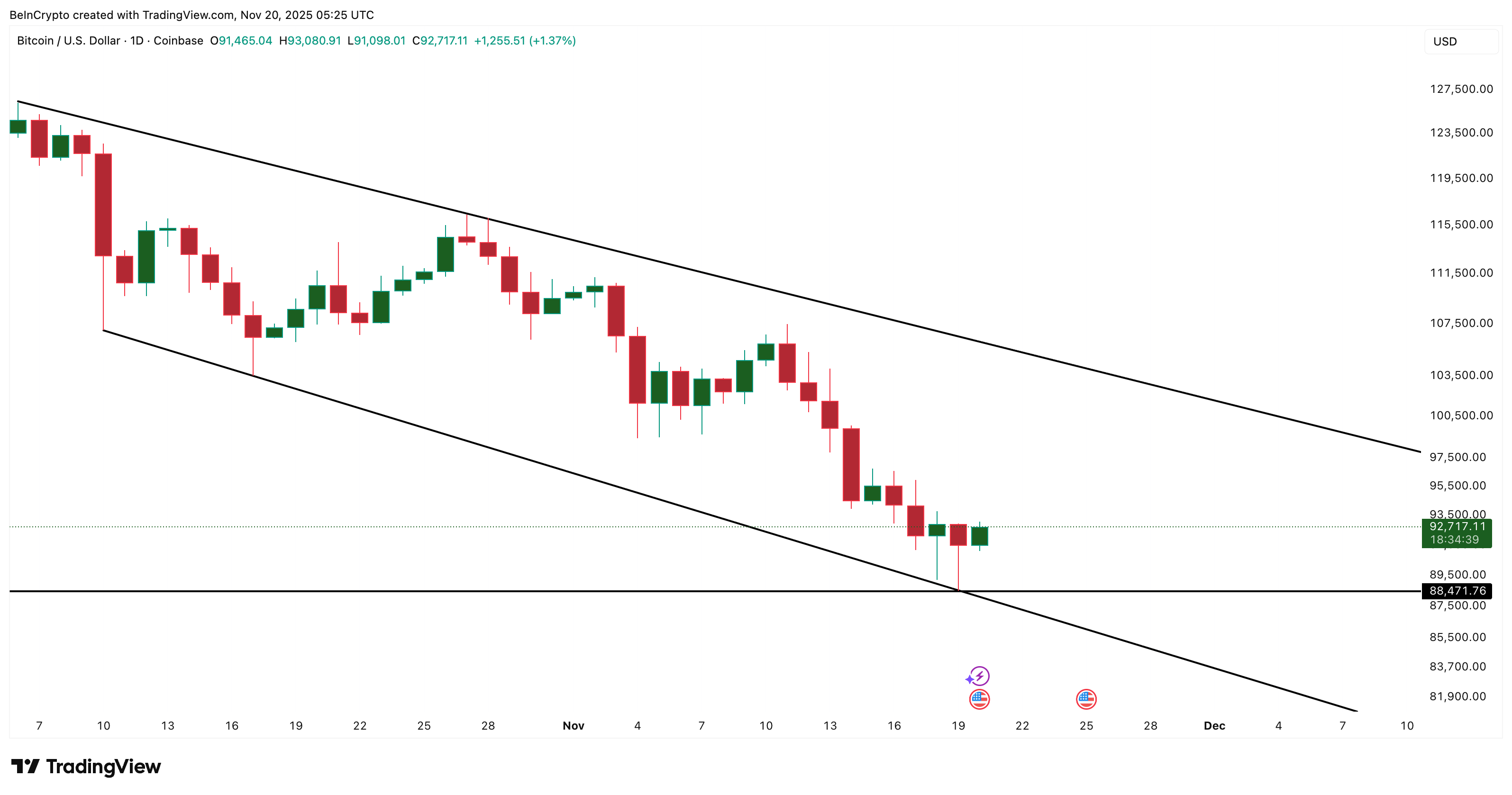
Bitcoin's Falling WedgeBitcoin’s Falling Wedge: TradingView

Between November 14 and November 19, the Bitcoin price made a lower low, but the SOPR (Spent Output Profit Ratio) made a higher low, rising from 0.98 to 0.99. SOPR shows whether the coins being spent were bought at a profit or a loss. When SOPR drops below 1, most traders are selling at a loss.

Want more token insights like this? Sign up for Editor Harsh Notariya’s Daily Crypto Newsletter here.
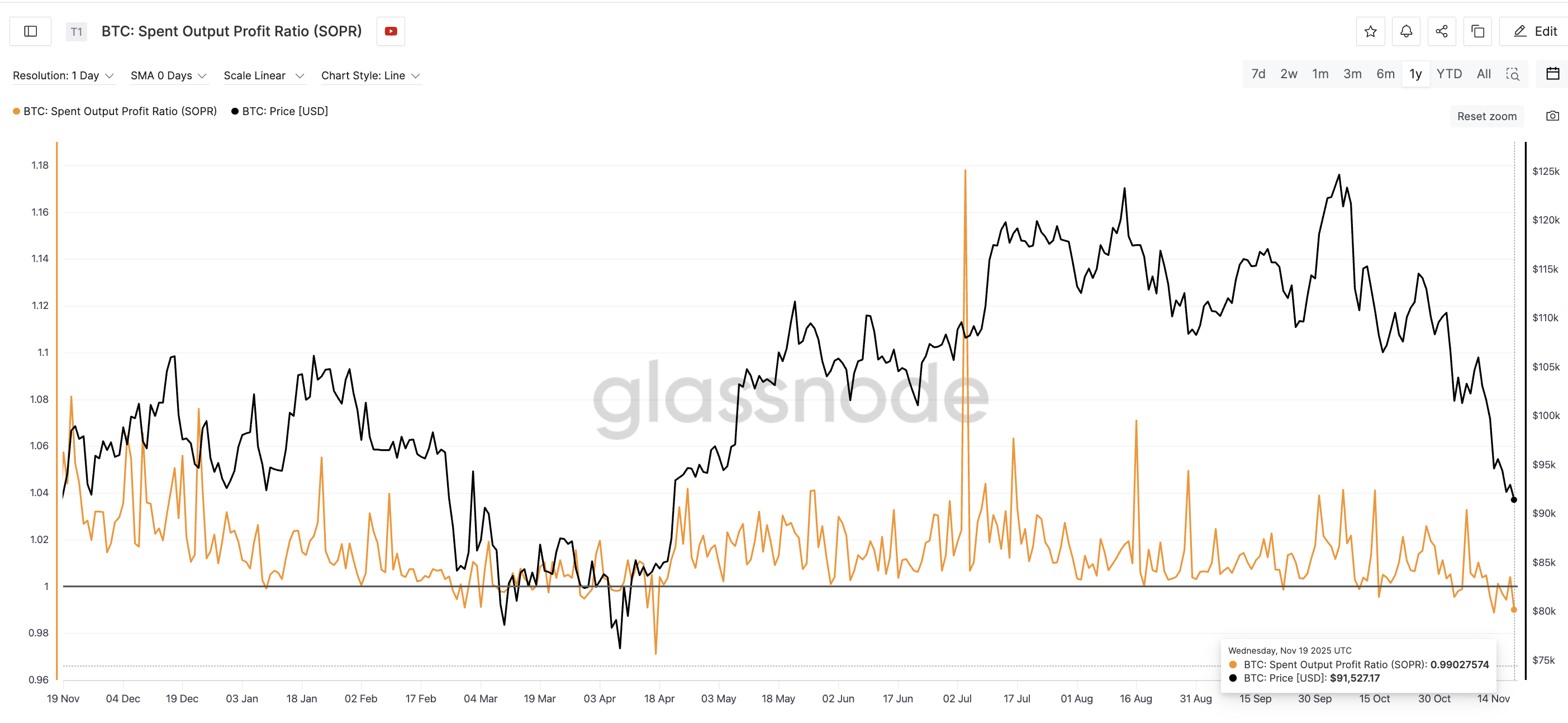
SOPR Divergence FlashesSOPR Divergence Flashes: Glassnode

When it climbs while the price continues to fall, it means holders are not panic-selling and are refusing to exit at cheaper prices. That reflects a strong conviction.

A similar pattern showed up between March 30 and April 8. The BTC price made a lower low then too, while SOPR rose from 0.994 to 0.998, even though the market was still in a downtrend. That divergence marked the bottom. From there, Bitcoin rallied from $76,270 to $111,695 — a 46% surge, within weeks.

The same style of on-chain divergence is now flashing again inside the falling wedge. Do note that technical divergences can fail in heavy downtrends. On-chain divergences matter more because they reflect real spending behavior rather than just chart patterns.

Heavy Supply Zones Still Block the Trend Reversal

However, for the SOPR divergence to play out, the Bitcoin price needs to cross key levels.

Glassnode’s URPD (UTXO Realized Price Distribution) data shows two supply clusters that sit right above the current rebound. The first is around $95,900, and the next sits close to $100,900.
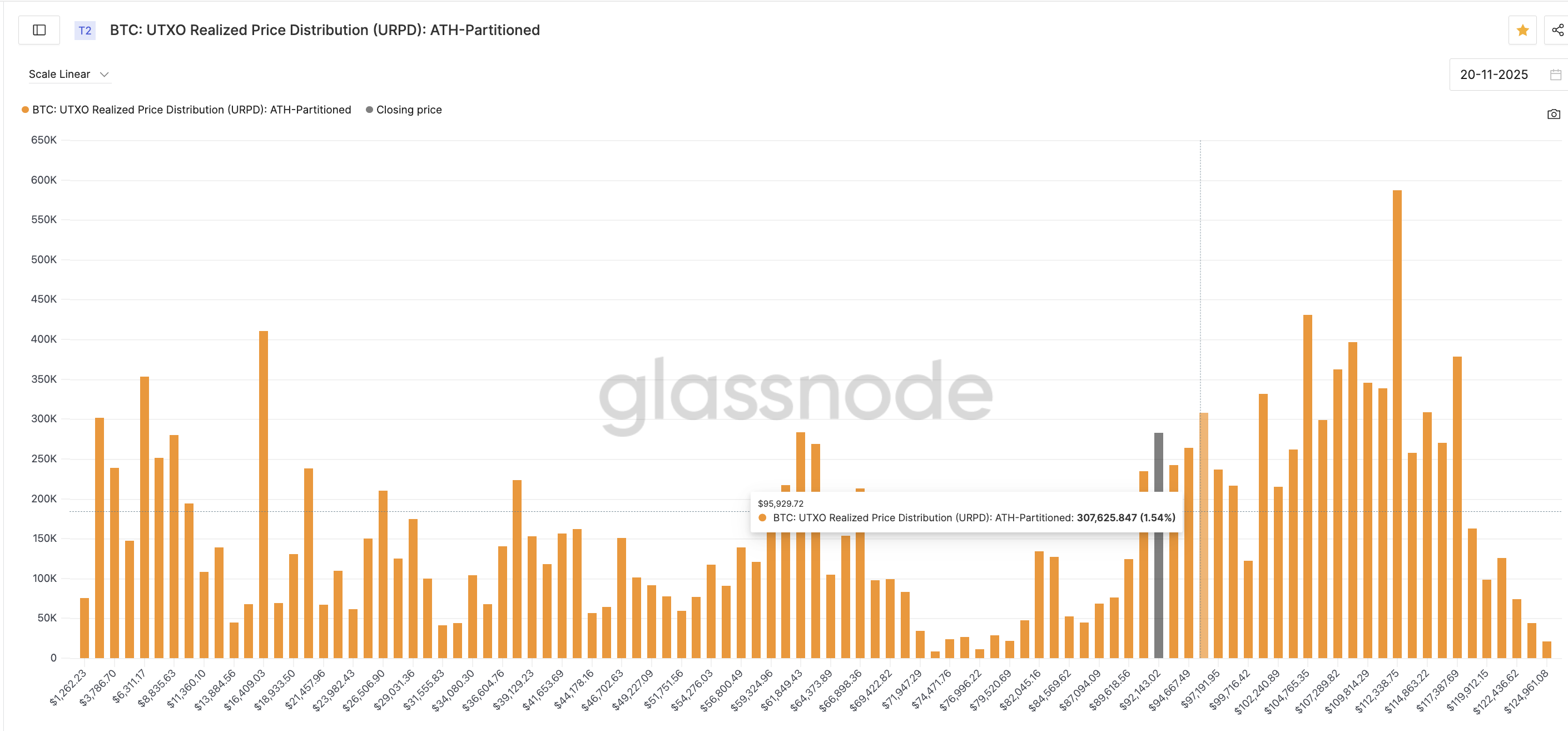
First BTC Resistance Or Supply ClusterFirst BTC Resistance Or Supply Cluster: Glassnode

These levels also align with the key technical resistance zones that we will discuss next.

UTXO Realized Price Distribution (URPD) shows how much supply was last moved at each price level. It highlights where large clusters of holders sit, which often act as support or resistance.
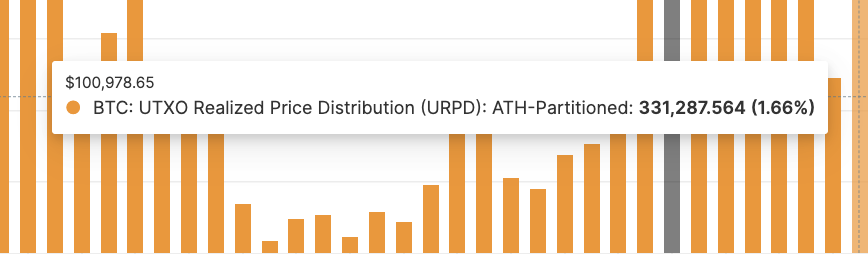
Higher Supply ClusterHigher BTC Supply Cluster: Glassnode

These are regions where many past buyers may try to exit again. Clearing both levels is the confirmation that turns a bounce into a trend reversal.

Bitcoin Price Levels That Matter

The Bitcoin price first needs to move past $95,700, the same level that rejected the recovery on November 15. This resistance level also aligns with the first URPD cluster, mentioned earlier.

If it clears that, it can attack $100,200, which is both a Fibonacci barrier and sits below the URPD cluster at $100,900. Only above this zone can the falling wedge truly flip bullish.

If BTC price loses the recent low near the wedge floor at $88,400, the price risks sliding lower if sentiment weakens.
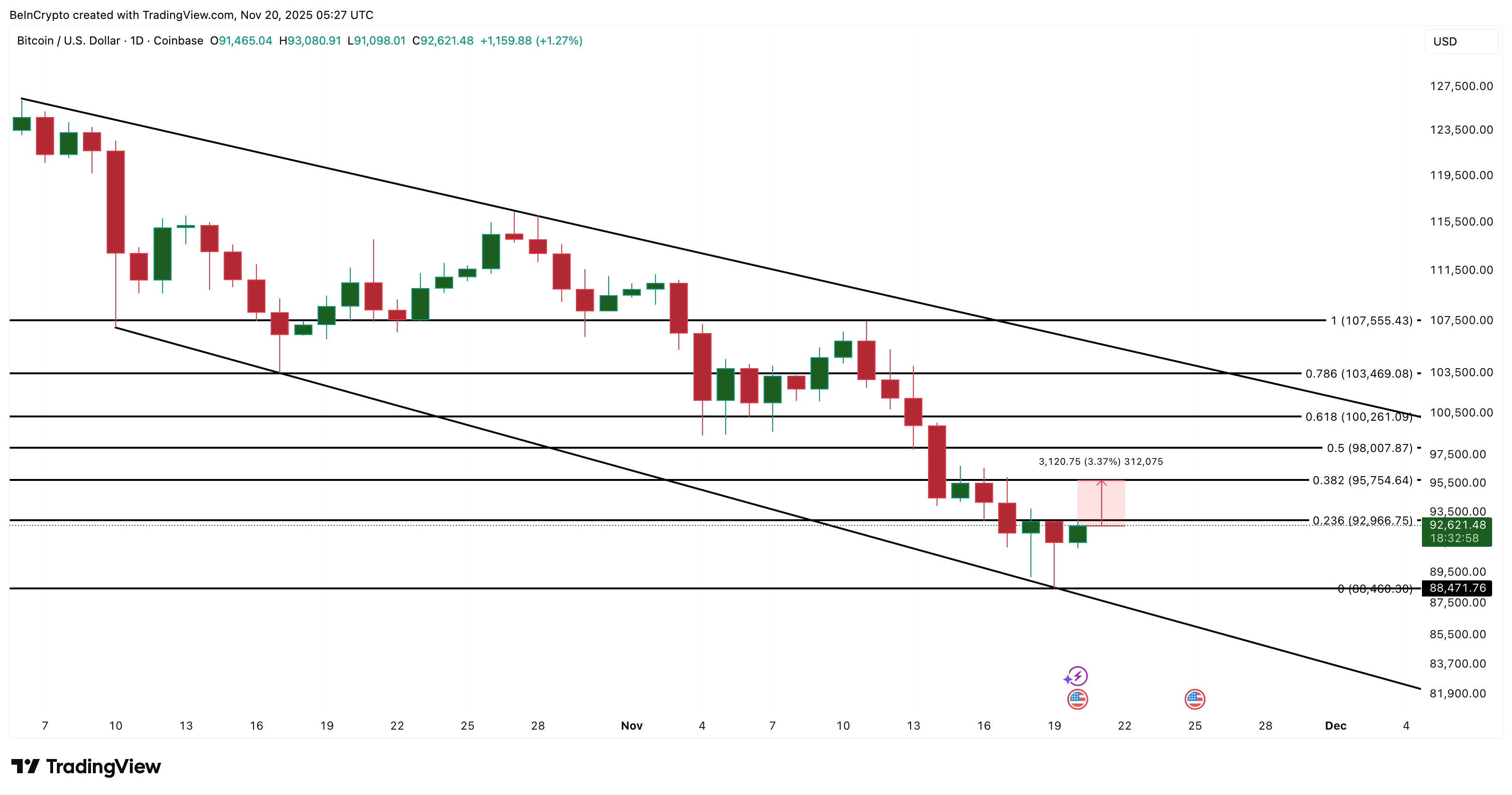
Bitcoin Price AnalysisBitcoin Price Analysis: TradingView

For now, Bitcoin has delivered a clean wedge bounce and a rare on-chain divergence. Those two together raise the odds of a bottom forming. But the resistances at $95,700 and then at $100,200 still decide whether Bitcoin just turned bullish — or if this is only a temporary bounce.


Market Opportunity
Bullish Degen Logo
Bullish Degen Price(BULLISH)
$0.01902
$0.01902$0.01902
+0.26%
USD
Bullish Degen (BULLISH) Live Price Chart
Disclaimer: The articles reposted on this site are sourced from public platforms and are provided for informational purposes only. They do not necessarily reflect the views of MEXC. All rights remain with the original authors. If you believe any content infringes on third-party rights, please contact service@support.mexc.com for removal. MEXC makes no guarantees regarding the accuracy, completeness, or timeliness of the content and is not responsible for any actions taken based on the information provided. The content does not constitute financial, legal, or other professional advice, nor should it be considered a recommendation or endorsement by MEXC.

You May Also Like

Crypto Casino Luck.io Pays Influencers Up to $500K Monthly – But Why?

Crypto Casino Luck.io Pays Influencers Up to $500K Monthly – But Why?

Crypto casino Luck.io is reportedly paying influencers six figures a month to promote its services, a June 18 X post from popular crypto trader Jordan Fish, aka Cobie, shows. Crypto Influencers Reportedly Earning Six Figures Monthly According to a screenshot of messages between Cobie and an unidentified source embedded in the Wednesday post, the anonymous messenger confirmed that the crypto company pays influencers “around” $500,000 per month to promote the casino. They’re paying extremely well (6 fig per month) pic.twitter.com/AKRVKU9vp4 — Cobie (@cobie) June 18, 2025 However, not everyone was as convinced of the number’s accuracy. “That’s only for Faze Banks probably,” one user replied. “Other influencers are getting $20-40k per month. So, same as other online crypto casinos.” Cobie pushed back on the user’s claims by identifying the messenger as “a crypto person,” going on to state that he knew of “4 other crypto people” earning “above 200k” from Luck.io. Drake’s Massive Stake.com Deal Cobie’s post comes amid growing speculation over celebrity and influencer collaborations with crypto casinos globally. Aubrey Graham, better known as Toronto-based rapper Drake, is reported to make nearly $100 million every year from his partnership with cryptocurrency casino Stake.com. As part of his deal with the Curaçao-based digital casino, the “Nokia” rapper occasionally hosts live-stream gambling sessions for his more than 140 million Instagram followers. Founded by entrepreneurs Ed Craven and Bijan Therani in 2017, the organization allegedly raked in $2.6 billion in 2022. Stake.com has even solidified key partnerships with Alfa Romeo’s F1 team and Liverpool-based Everton Football Club. However, concerns remain over crypto casinos’ legality as a whole , given their massive accessibility and reach online. Earlier this year, Stake was slapped with litigation out of Illinois for supposedly running an illegal online casino stateside while causing “severe harm to vulnerable populations.” “Stake floods social media platforms with slick ads, influencer videos, and flashy visuals, making its games seem safe, fun, and harmless,” the lawsuit claims. “By masking its real-money gambling platform as just another “social casino,” Stake creates exactly the kind of dangerous environment that Illinois gambling laws were designed to stop.”
Share
CryptoNews2025/06/19 04:53
Brera Holdings Rebrands as Solmate, Raises $300 Million for SOL Treasury

Brera Holdings Rebrands as Solmate, Raises $300 Million for SOL Treasury

Detail: https://coincu.com/news/solmate-rebrand-300m-sol-treasury/
Share
Coinstats2025/09/19 03:40
Sui Mainnet Recovers After 6-Hour Network Stall: No Funds at Risk

Sui Mainnet Recovers After 6-Hour Network Stall: No Funds at Risk

On January 14, 2026, Sui Mainnet faced a significant disruption, leaving the network stalled for roughly six hours. The incident was caused by an internal divergence
Share
Tronweekly2026/01/17 09:30