The post Russia’s Economy Signals Potential Recession Amid Inflation and Ukraine War appeared on BitcoinEthereumNews.com. Russia’s economy is facing severe challenges in 2024, with 31% of Russians unable to afford basic groceries due to soaring inflation outpacing wages, driven by the ongoing war in Ukraine, sanctions, and military spending. This has led to reduced consumer spending, industry contraction, and a looming recession. Inflation surges beyond wage growth: Food prices have risen sharply, forcing cutbacks on essentials like milk and rice, with sales dropping 8-10% in recent months. Consumer spending collapses across sectors, from retail to electronics, with car sales down 23% amid high interest rates and taxes. Oil revenues fall 21% due to sanctions and lower crude prices, contributing to a 0.6% GDP contraction in Q3 and a widening budget deficit. Russia’s economic crisis 2024: Inflation hits hard as war drags on, slashing spending and industries. Discover impacts on daily life and forecasts—stay informed on global ripples. What is causing Russia’s economic struggles in 2024? Russia’s economic struggles stem primarily from the prolonged invasion of Ukraine launched in February 2022, which has triggered high inflation, international sanctions, and disrupted energy exports. While military spending initially boosted GDP and wages by nearly 20%, inflation has eroded these gains, leading to reduced household consumption and industrial slowdowns. Central bank rate hikes to 21% temporarily curbed price rises, but now at 6.8%, the economy shows signs of recession with shrinking sectors like steel and coal. How are Ukrainian military actions impacting Russia’s economy? Ukrainian drone strikes have extended deep into Russian territory, targeting refineries and ports as far as 2,000 miles into Siberia, causing fuel shortages and price spikes since late August. These attacks have exacerbated gasoline scarcity in various regions, despite a slight dip in November. Combined with U.S. sanctions on major oil producers like Rosneft PJSC and Lukoil PJSC imposed in October, oil and gas revenues… The post Russia’s Economy Signals Potential Recession Amid Inflation and Ukraine War appeared on BitcoinEthereumNews.com. Russia’s economy is facing severe challenges in 2024, with 31% of Russians unable to afford basic groceries due to soaring inflation outpacing wages, driven by the ongoing war in Ukraine, sanctions, and military spending. This has led to reduced consumer spending, industry contraction, and a looming recession. Inflation surges beyond wage growth: Food prices have risen sharply, forcing cutbacks on essentials like milk and rice, with sales dropping 8-10% in recent months. Consumer spending collapses across sectors, from retail to electronics, with car sales down 23% amid high interest rates and taxes. Oil revenues fall 21% due to sanctions and lower crude prices, contributing to a 0.6% GDP contraction in Q3 and a widening budget deficit. Russia’s economic crisis 2024: Inflation hits hard as war drags on, slashing spending and industries. Discover impacts on daily life and forecasts—stay informed on global ripples. What is causing Russia’s economic struggles in 2024? Russia’s economic struggles stem primarily from the prolonged invasion of Ukraine launched in February 2022, which has triggered high inflation, international sanctions, and disrupted energy exports. While military spending initially boosted GDP and wages by nearly 20%, inflation has eroded these gains, leading to reduced household consumption and industrial slowdowns. Central bank rate hikes to 21% temporarily curbed price rises, but now at 6.8%, the economy shows signs of recession with shrinking sectors like steel and coal. How are Ukrainian military actions impacting Russia’s economy? Ukrainian drone strikes have extended deep into Russian territory, targeting refineries and ports as far as 2,000 miles into Siberia, causing fuel shortages and price spikes since late August. These attacks have exacerbated gasoline scarcity in various regions, despite a slight dip in November. Combined with U.S. sanctions on major oil producers like Rosneft PJSC and Lukoil PJSC imposed in October, oil and gas revenues…

Russia’s Economy Signals Potential Recession Amid Inflation and Ukraine War

For feedback or concerns regarding this content, please contact us at crypto.news@mexc.com
  • Inflation surges beyond wage growth: Food prices have risen sharply, forcing cutbacks on essentials like milk and rice, with sales dropping 8-10% in recent months.

  • Consumer spending collapses across sectors, from retail to electronics, with car sales down 23% amid high interest rates and taxes.

  • Oil revenues fall 21% due to sanctions and lower crude prices, contributing to a 0.6% GDP contraction in Q3 and a widening budget deficit.

Russia’s economic crisis 2024: Inflation hits hard as war drags on, slashing spending and industries. Discover impacts on daily life and forecasts—stay informed on global ripples.

What is causing Russia’s economic struggles in 2024?

Russia’s economic struggles stem primarily from the prolonged invasion of Ukraine launched in February 2022, which has triggered high inflation, international sanctions, and disrupted energy exports. While military spending initially boosted GDP and wages by nearly 20%, inflation has eroded these gains, leading to reduced household consumption and industrial slowdowns. Central bank rate hikes to 21% temporarily curbed price rises, but now at 6.8%, the economy shows signs of recession with shrinking sectors like steel and coal.

How are Ukrainian military actions impacting Russia’s economy?

Ukrainian drone strikes have extended deep into Russian territory, targeting refineries and ports as far as 2,000 miles into Siberia, causing fuel shortages and price spikes since late August. These attacks have exacerbated gasoline scarcity in various regions, despite a slight dip in November. Combined with U.S. sanctions on major oil producers like Rosneft PJSC and Lukoil PJSC imposed in October, oil and gas revenues plummeted 21% to 7.5 trillion rubles from January to October, per Finance Ministry data. This revenue drop, alongside lower global crude prices and a stronger ruble, has deepened economic cracks, with Q3 GDP shrinking 0.6% and the budget deficit reaching 1.9% of GDP.

Frequently Asked Questions

What percentage of Russians can’t afford basic groceries amid the 2024 economic pressures?

According to real-time data from SberIndex, 31% of Russians report they can no longer afford basic groceries, highlighting the severe impact of inflation and rising living costs as the war enters its fourth year. This figure underscores widespread financial strain across urban and rural areas.

How has inflation affected consumer behavior in Russia during late 2024?

Inflation in Russia has outpaced wage growth, leading many residents to slash spending on non-essentials like imported clothes and electronics. For instance, sales of milk, pork, buckwheat, and rice fell 8% to 10% in September and October, while overall retail revenue growth masks a 20% drop in net income for major chains like X5 Group, as people prioritize necessities.

Key Takeaways

  • War-driven inflation erodes gains: Despite a 20% wage increase from military investments, inflation at 6.8% has forced spending cuts, with food sales declining across categories.
  • Sanctions hit energy sector hard: Oil revenues down 21% due to U.S. measures and drone attacks, contributing to industrial contraction in steel (down 14%) and coal (worst in a decade).
  • Recession risks rise: With over half of industries shrinking and bad debts surging to 9.1 trillion rubles in banking, experts urge winding down military operations to stabilize the economy.

Conclusion

Russia’s economic struggles in 2024, fueled by the Ukraine invasion, sanctions, and internal inflation pressures, have led to a 0.6% GDP contraction, plummeting oil revenues, and widespread consumer cutbacks. As industries like retail and manufacturing buckle under high interest rates and taxes, the Center for Strategic Research warns of an imminent recession. To mitigate further damage, policymakers may need to prioritize de-escalation efforts, offering a pathway to recovery amid global economic uncertainties.

Thirty-one percent of Russians say they can’t afford basic groceries anymore. That number, from real-time data tracked by SberIndex, is a flashing siren. Across Russia, the everyday cost of living is crushing people as the war drags into its fourth winter.

This is the direct blowback of Vlad Putin’s decision to launch a full invasion of Ukraine back in February 2022. While missiles hit energy plants and homes in border regions, inflation and shortages are slamming people everywhere else.

In central and southern Russia, drone attacks are now frequent. Air raid sirens go off almost every night. Meanwhile, residents of cities like Moscow are waking up to a very different battle; the economic kind.

Food prices are rising faster than wages. Gasoline shortages are back. Household spending is down. Stores are closing. And even Russia’s biggest industries are buckling.

Russians slash spending as inflation outpaces income

“Prices are now rising faster than wages,” said Elena, a 27-year-old events manager outside Moscow. She told Bloomberg she’s stopped buying imported clothes and is switching to local brands.

GDP once grew because of military-related investment. That same boost pushed up wages almost 20% in 2024. But now, inflation is eating away those gains.

To fight inflation, Russia’s central bank hiked rates to a record 21% last October. That slowed things down but didn’t fix the damage. Now that rates have eased, the country is facing the long-delayed fallout.

The Center for Macroeconomic Analysis said inflation is only down to 6.8% because people stopped spending. Real-time data shows food sales are falling across the board.

According to Kommersant newspaper, milk, pork, buckwheat, and rice sales dropped by 8% to 10% in September and October. And it’s not just groceries. X5 Group, Russia’s largest supermarket chain, said revenue is up, but only because of inflation. Its net income dropped 20%. People simply aren’t buying like they used to.

The retail collapse is spreading fast. Almost half of all fashion retailers shut down in Q3, according to local reports. Electronics sales just hit a 30-year low.

Car sales fell 23% in the first nine months of the year. That’s partly due to a state recycling tax hike and high interest rates, which slammed imported and electric vehicle prices.

Military strikes and falling oil revenue deepen economic cracks

Ukrainian drones have been reaching deep into Russian territory. Some hit as far as 2,000 miles into Siberia, targeting refineries and ports. Fuel markets cracked hard at the end of August. Prices jumped. Shortages followed. While gas prices dipped slightly in November, many areas are still running low.

The US is adding more pressure. In October, Washington slapped sanctions on Rosneft PJSC and Lukoil PJSC, two of Russia’s biggest oil producers. As a result, oil and gas income dropped 21% from January to October, hitting 7.5 trillion rubles, according to Finance Ministry data. That’s down from the year before.

Crude prices are lower. Sanctions are tighter. And a stronger ruble means producers get fewer rubles per barrel.

Russia’s economy shrank 0.6% in Q3. The budget deficit hit 1.9% of GDP in October. Officials expect it to hit 2.6% by year-end.

Meanwhile, the Center for Strategic Research said on Nov. 18 that more than half of Russia’s industries are shrinking, and a recession is now nearly certain.

Industries like steel and coal are collapsing. Steel use is down 14%. Demand in construction is down 10%, in machinery it’s down 32%. Coal mining is the worst it’s been in a decade. In the banking sector, bad corporate debt hit 9.1 trillion rubles ($112 billion) in Q2, 10.4% of the total. Retail loans are going bad too, now at 12%.

Even the trade relationship with China has cooled off. Fuel exports dropped to their lowest since the invasion began.

And the Trump administration is still working behind the scenes on a peace deal to give the Kremlin the sanctions relief it wants.

Despite all this, Putin won’t quit. Instead, he’s trying to keep the pressure from getting worse. In October, while Trump was threatening to send Tomahawk missiles to Ukraine, Putin reached out. He floated the idea of more talks, reportedly advised by Trump’s envoy, Steve Witkoff.

But no deal means more pain. A value-added tax hike is coming in 2026. Small businesses and consumers will pay more. There’s a new tech levy on electronics. Car taxes are rising. And according to Meduza, the Kremlin told media outlets not to mention Putin’s name in tax reports.

“If Russian authorities want the economy to keep functioning normally, special military operations must be wound down,” said Oleg Buklemishev, head of the Center for Economic Policy Research at Moscow State. “The realization they need to make the choice has not fully come, but the warning bells are already ringing.”

Source: https://en.coinotag.com/russias-economy-signals-potential-recession-amid-inflation-and-ukraine-war

Market Opportunity
Wink Logo
Wink Price(LIKE)
$0.00166
$0.00166$0.00166
+1.15%
USD
Wink (LIKE) Live Price Chart
Disclaimer: The articles reposted on this site are sourced from public platforms and are provided for informational purposes only. They do not necessarily reflect the views of MEXC. All rights remain with the original authors. If you believe any content infringes on third-party rights, please contact crypto.news@mexc.com for removal. MEXC makes no guarantees regarding the accuracy, completeness, or timeliness of the content and is not responsible for any actions taken based on the information provided. The content does not constitute financial, legal, or other professional advice, nor should it be considered a recommendation or endorsement by MEXC.

You May Also Like

Tether Backs Ark Labs’ $5.2 Million Bet on Bitcoin’s Stablecoin Revival

Tether Backs Ark Labs’ $5.2 Million Bet on Bitcoin’s Stablecoin Revival

The post Tether Backs Ark Labs’ $5.2 Million Bet on Bitcoin’s Stablecoin Revival appeared on BitcoinEthereumNews.com. In brief Ark Labs secured backing from Tether
Share
BitcoinEthereumNews2026/03/12 21:44
MySQL Single Leader Replication with Node.js and Docker

MySQL Single Leader Replication with Node.js and Docker

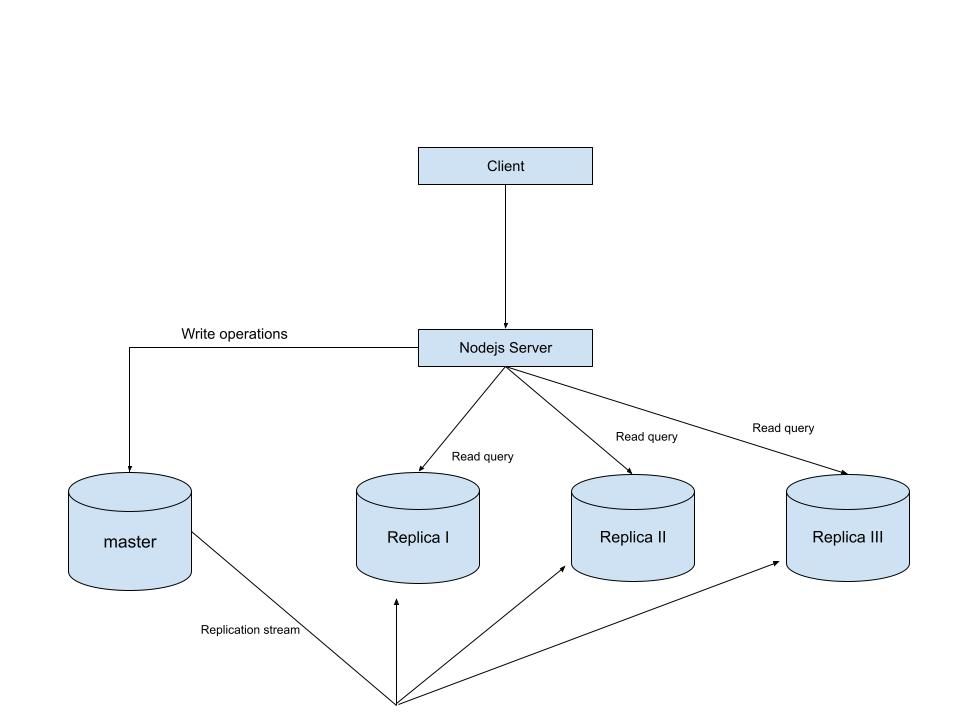
Modern applications demand high availability and the ability to scale reads without compromising performance. One of the most common strategies to achieve this is Replication. In this setup, we configured a single database to act as the leader (master) and handle all write operations, while three replicas handle read operations. In this article, we’ll walk through how to set up MySQL single-leader replication on your local machine using Docker. Once the replication is working, we’ll connect it to a Node.js application using Sequelize ORM, so that reads are routed to the replica and writes go to the master. By the end, you’ll have a working environment where you can see replication in real time Prerequisites knowledge of database replication Background knowledge of docker and docker compose Background knowledge of Nodejs and how to run a NodeJS server An Overview of what we are building Setup Setup our database servers on docker compose in the root of our project directory, create a file named docker-compose.yml with the following content to setup our mysql primary and replica databases. \ \ name: "learn-replica" volumes: mysqlMasterDatabase: mysqlSlaveDatabase: mysqlSlaveDatabaseII: mysqlSlaveDatabaseIII: networks: mysql-replication-network: services: mysql-master: image: mysql:latest container_name: mysql-master command: --server-id=1 --log-bin=ON environment: MYSQL_ROOT_PASSWORD: master MYSQL_DATABASE: replicaDb ports: - "3306:3306" volumes: - mysqlMasterDatabase:/var/lib/mysql networks: - mysql-replication-network mysql-slave: image: mysql:latest container_name: mysql-slave command: --server-id=2 --log-bin=ON environment: MYSQL_ROOT_PASSWORD: slave MYSQL_DATABASE: replicaDb MYSQL_ROOT_HOST: "%" ports: - "3307:3306" volumes: - mysqlSlaveDatabase:/var/lib/mysql depends_on: - mysql-master networks: - mysql-replication-network mysql-slaveII: image: mysql:latest container_name: mysql-slaveII command: --server-id=2 --log-bin=ON environment: MYSQL_ROOT_PASSWORD: slave MYSQL_DATABASE: replicaDb MYSQL_ROOT_HOST: "%" ports: - "3308:3306" volumes: - mysqlSlaveDatabaseII:/var/lib/mysql depends_on: - mysql-master networks: - mysql-replication-network mysql-slaveIII: image: mysql:latest container_name: mysql-slaveIII command: --server-id=3 --log-bin=ON environment: MYSQL_ROOT_PASSWORD: slave MYSQL_DATABASE: replicaDb MYSQL_ROOT_HOST: "%" ports: - "3309:3306" volumes: - mysqlSlaveDatabaseIII:/var/lib/mysql depends_on: - mysql-master networks: - mysql-replication-network In this setup, I’m creating a master database container called mysql-master and 3 replica containers called mysql-slave, mysql-slaveII and mysql-slaveIII. I won’t go too deep into the docker-compose.yml file since it’s just a basic setup, but I do want to walk you through the command line instructions used in all four services because that’s where things get interesting.
command: --server-id=1 --log-bin=ON The --server-id option gives each MySQL server in your replication setup its own name tag. Each one has to be unique and without it, replication won’t work at all. Another cool option not included here is binlog_format=ROW. This tells MySQL how to keep track of changes before passing them along to the replicas. By default, MySQL already uses row-based replication, but you can explicitly set it to ROW to be sure or switch it to STATEMENT if you’d rather log the actual SQL statements instead of row-by-row changes. \ Run our containers on docker Now, in the terminal, we can run the following command to spin up our database containers: docker-compose up -d \ Setting Up Our Master (Primary) Server To configure our master server, we would have to first access the running instance on docker using the following command docker exec -it mysql-master bash This command opens an interactive Bash shell inside the running Docker container named mysql-master, allowing us to run commands directly inside that container. \ Now that we’re inside the container, we can access the MySQL server and start running commands. type: mysql -uroot -p This will log you into MySQL as the root user. You’ll be prompted to enter the password you set in your docker-compose.yml file. \ Next, we need to create a special user that our replicas will use to connect to the master server and pull data. Inside the MySQL prompt, run the following commands: \ CREATE USER 'repl_user'@'%' IDENTIFIED BY 'replication_pass'; GRANT REPLICATION SLAVE ON . TO 'repl_user'@'%'; FLUSH PRIVILEGES; Here’s what’s happening: CREATE USER makes a new MySQL user called repl_user with the password replication_pass. GRANT REPLICATION SLAVE gives this user permission to act as a replication client. FLUSH PRIVILEGES tells MySQL to reload the user permissions so they take effect immediately. \ Time to Configure the Replica (Secondary) Servers a. First, let’s access the replica containers the same way we did with the master. Run this command in your terminal for each of the replica containers: \ docker exec -it <replica_container_name> bash mysql -uroot -p <replica_container_name> should be replace with the name of the replica container you are trying to setup b. Now it’s time to tell our replica where to get its data from. While inside the replica’s MySQL shell, run the following command to configure replication using the master’s details: CHANGE REPLICATION SOURCE TO SOURCE_HOST='mysql-master', SOURCE_USER='repl_user', SOURCE_PASSWORD='replication_pass', GET_SOURCE_PUBLIC_KEY=1; With the replication settings in place, let’s fire up the replica and get it syncing with the master. Still inside the MySQL shell on the replica, run: START REPLICA; This starts the replication process. To make sure everything is working, check the replica’s status with:
SHOW REPLICA STATUS\G; Look for Replica_IO_Running and Replica_SQL_Running — if both say Yes, congratulations! 🎉 Your replica is now successfully connected to the master and replicating data in real time.
Testing Our Replication Setup from the Node.js App Now that our replication is successfully set up, we can configure our Node.js server to observe the real-time effect of data being replicated from the master server to the replica server whenever we write to it. We start by installing the following dependencies:
npm i express mysql2 sequelize \ Now create a folder called src in the root directory and add the following files inside that folder connection.js, index.js and model.js. Our current directory should look like this We can now set up our connections to our master and replica server in the connection.js file as shown below
const Sequelize = require("sequelize"); const sequelize = new Sequelize({ dialect: "mysql", replication: { write: { host: "127.0.0.1", username: "root", password: "master", database: "replicaDb", }, read: [ { host: "127.0.0.1", username: "root", password: "slave", database: "replicaDb", port: 3307 }, { host: "127.0.0.1", username: "root", password: "slave", database: "replicaDb", port: 3308 }, { host: "127.0.0.1", username: "root", password: "slave", database: "replicaDb", port: 3309 }, ], }, }); async function connectdb() { try { await sequelize.authenticate(); } catch (error) { console.error("❌ unable to connect to the follower database", error); } } connectdb(); module.exports = { sequelize, }; \ We can now create a User table in the model.js file
const {DataTypes} = require("sequelize"); const { sequelize } = require("./connection"); const User = sequelize.define("User", { name: { type: DataTypes.STRING, allowNull: false, }, email: { type: DataTypes.STRING, unique: true, allowNull: false, }, }); module.exports = User \ and finally in our index.js file we can start our server and listen for connections on port 3000. from the code sample below, all inserts or updates will be routed by sequelize to the master server. while all read queries will be routed to the read replicas.
const express = require("express"); const { sequelize } = require("./connection"); const User = require("./model"); const app = express(); app.use(express.json()); async function main() { await sequelize.sync({ alter: true }); app.get("/", (req, res) => { res.status(200).json({ message: "first step to setting server up", }); }); app.post("/user", async (req, res) => { const { email, name } = req.body; let newUser = await User.build({ name, email, }); // This INSERT will go to the write (master) connection newUser = newUser.save({ returning: false }); res.status(201).json({ message: "User successfully created", }); }); app.get("/user", async (req, res) => { // This SELECT query will go to one of the read replicas const users = await User.findAll(); res.status(200).json(users); }); app.listen(3000, () => { console.log("server has connected"); }); } main(); When you make a POST request to the /users endpoint, take a moment to check both the master and replica servers to observe how data is replicated in real time. Right now, we are relying on Sequelize to automatically route requests, which works for development but isn’t robust enough for a production environment. In particular, if the master node goes down, Sequelize cannot automatically redirect requests to a newly elected leader. In the next part of this series, we’ll explore strategies to handle these challenges
Share
Hackernoon2025/09/18 14:44
Nvidia shares fall 3%

Nvidia shares fall 3%

The post Nvidia shares fall 3% appeared on BitcoinEthereumNews.com. Home » AI » Nvidia shares fall 3% Chipmaker extends decline as investors continue to take profits from recent highs. Photo: Budrul Chukrut/SOPA Images/LightRocket via Getty Images Key Takeaways Nvidia’s stock decreased by 3% today. The decline extends Nvidia’s recent losing streak. Nvidia shares fell 3% today, extending the chipmaker’s recent decline. The stock dropped further during trading as the artificial intelligence chip leader continued its pullback from recent highs. Disclaimer Source: https://cryptobriefing.com/nvidia-shares-fall-2-8/
Share
BitcoinEthereumNews2025/09/18 03:13